Behavior problems in children and teens (such as defiance, tantrums, refusal, arguing, aggression) respond well to structured behavioral treatment, and the strongest evidence supports treatments that work directly with parents rather than only with the child. At Evidence Based Psychological Care in Calabasas, we use behavioral parent training to change the patterns that keep difficult behavior in place.
Child & Teen
Behavior Problems

Does this sound like your family?
Homework, screens, or bedtime turn into a fight nearly every day
Your child argues with every instruction, no matter how small
You've been called by the school about behavior more than once
Tantrums or meltdowns last far longer than they should for your child's age
Consequences don't seem to work, or they escalate things
You and your partner disagree about how to handle it
You find yourself avoiding requests because the pushback isn't worth it
None of this means you're doing something wrong. Difficult behavior is usually a pattern that has quietly become self-sustaining — and patterns can be changed.


Here is how EBPC, Inc. can help
Treatment starts with a careful assessment of when the behavior happens, what precedes it, and what follows it. That analysis drives everything else, because the same behavior can serve very different functions in different families.
From there, most families work on: Behavioral parent training for children and teens. Parents learn to set clear expectations, deliver consequences consistently, and reinforce the behavior they want more of. Sessions focus on specific situations in your home, not general parenting philosophy. Older children and teens are usually seen individually as well, working on frustration tolerance, problem-solving, and managing conflict without escalation.
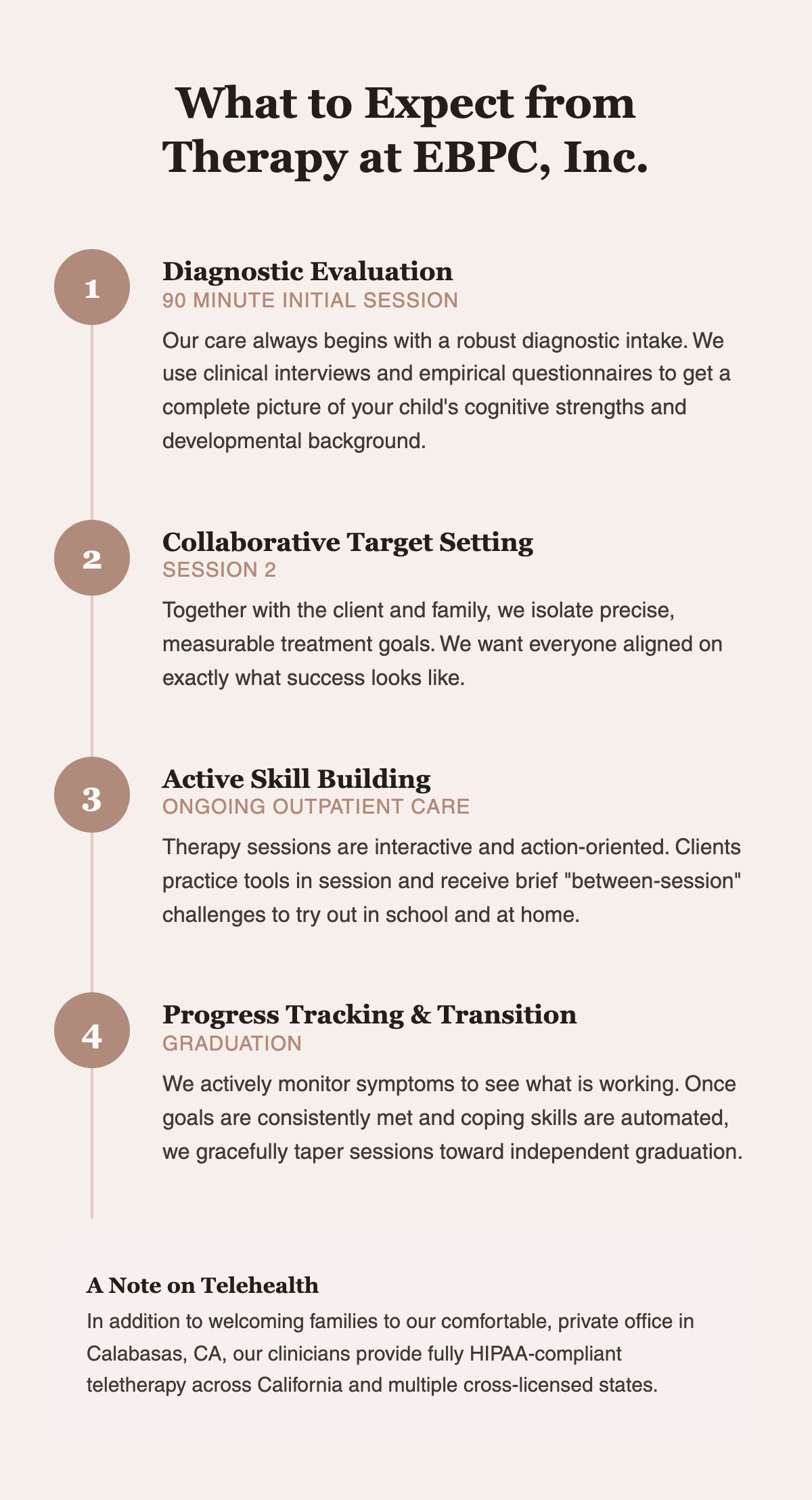
Click here to get started on your journey. Our intake coordinator will help walk you through the steps to get started.
FAQs
-
Most families see meaningful change within three to four months of consistent weekly work, though this varies with the severity and duration of the difficulty and with how consistently new strategies are applied at home. We review progress with you regularly and adjust course rather than continuing indefinitely.
-
Work with one of our skilled and fully licensed therapists to help build lasting skills and change for you and your child. Janie Venturina, LMFT specializes in this work.
-
No. Behavior problems arise from a mix of temperament, developmental stage, family patterns, and environment. Parents are the most effective point of intervention — that's a statement about leverage, not blame.
-
For younger children, yes. For older children and teens, parents are typically involved in part of each session or in separate parent sessions.
-
Sometimes, and the two frequently co-occur. If the pattern suggests attention or impulse-control difficulties underneath the behavior, we may recommend an evaluation. See more here.
-
Yes, with your consent. Coordinating with teachers and school staff often accelerates progress.